Get fast, honest help after flooding with a flood damage restoration company in El Paso, TX. Learn costs, mold risks, and what real recovery looks like.
You wake up at 2 AM to the sound of water trickling somewhere it should not be. Maybe it is the monsoon that rolled through Northeast El Paso overnight, or maybe a pipe finally gave out under the slab foundation your house has sat on since 1987. Either way, your carpet is soaked, your drywall is wicking moisture upward, and the smell of wet insulation is already starting to fill the hallway. This is the moment when most homeowners realize that calling a flood damage restoration company in El Paso, TX is not just about drying things out. It is about stopping a small disaster from becoming a total loss. First Relief has handled flood recovery across El Paso County for years, and the reality is that what you do in the first 24 hours shapes everything that follows.
What Flood Damage Restoration Actually Involves in El Paso
Flood damage restoration is the process of returning a water-damaged property to its pre-loss condition through extraction, drying, dehumidification, sanitization, and reconstruction. In El Paso, this work is complicated by the region’s unique environmental factors. The Chihuahuan Desert climate means extremely low humidity most of the year, which can actually accelerate evaporation and create a false sense of security. Homeowners see surface water disappear quickly and assume the problem is solved, while moisture continues to migrate behind walls, under flooring, and into the wooden framing that holds their house together.
Best flood damage restoration company in El Paso, TX, we have noticed that most homeowners underestimate how much water their drywall and baseboards can absorb. Standard half-inch drywall can wick water upward at a rate of one inch per hour. In a ranch-style home with a single-level slab foundation, water has nowhere to drain except outward and upward through porous materials. By the time you see staining on the ceiling of the room below, the damage has already traveled through insulation, electrical boxes, and structural members. Professional restoration addresses what you cannot see, not just what is pooling on your floor.
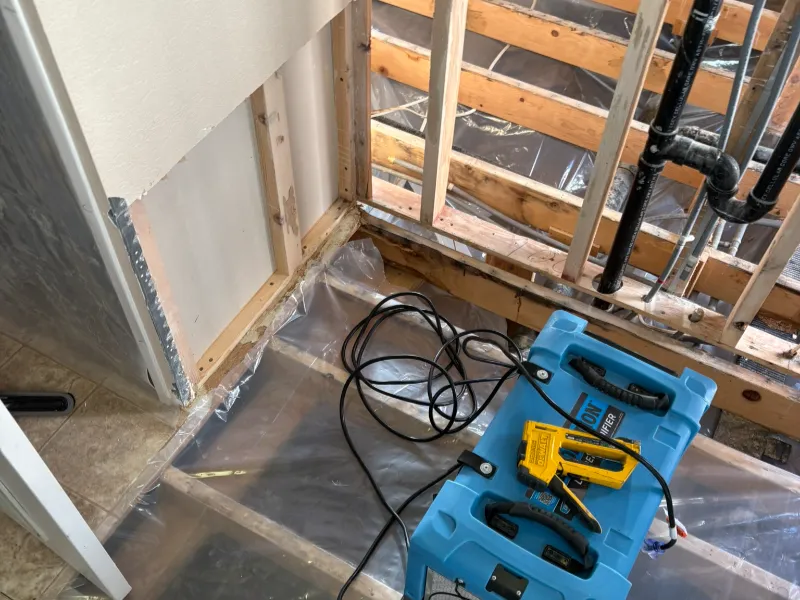
The equipment involved is specific and expensive: commercial-grade submersible pumps for standing water extraction, truck-mounted extraction units for saturated carpets, industrial air movers that create controlled airflow across wet surfaces, low-grain refrigerant dehumidifiers that pull moisture from the air and materials simultaneously, and thermal imaging cameras that detect temperature differentials behind walls where hidden moisture lingers. Air scrubbers with HEPA filtration remove particulates and mold spores during the drying process. The work also includes antimicrobial treatment of affected surfaces, content cleaning and pack-out for salvageable belongings, and detailed moisture mapping to document the drying progress for insurance purposes.
The Real Challenge El Paso Homeowners Face
The hardest truth about the professional flood damage restoration company in El Paso, TX is that the city’s infrastructure was not built for the kind of rainfall the North American Monsoon can deliver. El Paso averages only about nine inches of rain per year, but that rain often arrives in brief, violent bursts that overwhelm the thin, rocky desert soil and the open arroyo drainage system. When water cannot absorb into the ground, it channels down from the Franklin Mountains directly into residential neighborhoods, particularly in low-lying areas of Northeast and West El Paso. Streets become rivers, and homes that have never flooded before suddenly find water pushing through door frames and foundation cracks.
A client Affordable flood damage restoration company in El Paso, TX reached out when they noticed water pooling in their garage after a July monsoon storm dumped two inches of rain in under an hour. Their home in the Palomino neighborhood had never flooded in the fifteen years they had owned it. The water receded by morning, so they mopped the floor and assumed the worst was over. Three weeks later, their drywall started bubbling and a musty smell spread through the house. By the time they called for help, mold had colonized the wall cavity behind their water heater and spread into the adjacent laundry room. What could have been a $3,000 drying job became a $14,000 remediation and reconstruction project. The delay cost them more than money, it cost them their sense of safety in their own home.
Here is the objection most competitors ignore: your insurance company may not cover the full scope of what actually needs to happen. Many homeowners policies in Texas exclude flood damage from natural sources unless you carry a separate flood policy through the National Flood Insurance Program. Even when coverage exists, adjusters often approve drying and surface repair while denying the structural work, mold remediation, and content replacement that make a house truly livable again. The question competitors avoid is what happens when your insurance payout falls short of the actual restoration cost. Most restoration companies will not discuss this openly because they do not want to scare you away from calling them in the first place.
How First Relief Approaches Flood Recovery Differently
Most restoration companies operate on a volume model: get in fast, set up fans, run dehumidifiers for 72 hours, collect the check, and move to the next job. First Relief uses a forensic drying approach that starts with a full moisture assessment before any equipment is plugged in. This means thermal imaging of wall cavities, moisture meter readings at multiple depths in flooring and framing, and documentation of relative humidity and dew point throughout the affected zones. We create a drying plan specific to your home’s construction type, the category of water involved, and the local climate conditions at the time of loss.
What sets this apart in El Paso specifically is our understanding of desert construction and the secondary damage patterns that follow flash flooding. Homes in this area are typically built on slab foundations with minimal subfloor ventilation, which means once water gets under tile or laminate, it has no escape route except evaporation. We use specialized injection drying systems that force dry air into wall cavities and subfloor spaces without tearing out finished surfaces unnecessarily. We also know which neighborhoods in El Paso are prone to repeated flooding, which municipal drainage projects are ongoing, and how to coordinate with city environmental services when standing water creates a public health concern.
Here is the insight generic articles never mention: the category of water determines the restoration protocol, and in El Paso, flash flood water is almost always Category 3, also known as black water. This is not because the water looks dirty. It is because floodwater that has traveled across streets, through arroyos, and over landscaping has picked up petroleum products, pesticides, raw sewage from overwhelmed sewer systems, and chemical runoff from industrial areas. Category 3 water cannot simply be dried out. Affected porous materials, carpet, pad, drywall below the water line, and insulation must be removed and discarded according to EPA and OSHA protocols. Any restoration company that tells you they can save your carpet after a flash flood is either cutting corners or does not understand the health risks involved.
Practical Tips: What to Know Before You Decide
Your first move after discovering water damage should be to stop the source if it is safe to do so, then document everything with photos and video before touching anything. Insurance adjusters need visual evidence of the initial damage state, and your memory will not be reliable after the stress of the event. Turn off electricity to affected areas if water has reached outlets or appliances. Do not use household fans or vacuums on standing water, these can create electrical hazards and spread contamination.
Working with clients in El Paso, our team found that roughly half of homeowners who experience flood damage wait more than 48 hours before calling a professional. They spend that time trying to handle it themselves with shop vacs, box fans, and bleach solutions. By the time we arrive, mold has already started germinating, which requires a completely different and more expensive remediation protocol. Mold can begin growing on damp organic materials within 24 to 48 hours in El Paso’s warm temperatures, even with low ambient humidity. The sooner you bring in professional drying equipment, the more of your home and belongings you can actually save.
One local market-specific tip: El Paso’s hard water, with mineral content well above the national average, leaves calcium and magnesium deposits on surfaces as floodwater evaporates. These deposits can etch glass, discolor grout, and clog plumbing fixtures if not addressed during the cleaning phase. A standard water extraction and drying job will not remove these mineral residues. Ask your restoration contractor whether their cleaning protocol includes descaling treatments for hard water deposits, especially on tile, stone, and glass shower enclosures. This is a detail that separates local expertise from out-of-town contractors who treat every job the same regardless of regional water chemistry.
Why Fast Action and Honest Assessment Matter More Than Promises
The difference between a home that recovers from flood damage and one that never feels right again comes down to two things: speed and thoroughness. Speed matters because every hour of delay allows moisture to migrate deeper into structural materials and mold to establish colonies that will affect your air quality for years. Thoroughness matters because half-finished restoration leaves hidden damage that will surface as odors, warping, and health issues long after the contractor has moved on. First Relief has helped families across El Paso rebuild after monsoon flooding, pipe bursts, and sewer backups with a focus on doing the job completely the first time. If your home has taken on water, the next step is a same-day moisture assessment to understand what you are actually dealing with before you make any decisions about repair or replacement.
FAQs
How much does flood damage restoration cost in El Paso?
Costs typically range from $1,500 for minor water extraction and drying to $15,000 or more for extensive flooding with mold remediation and reconstruction. Flash flood damage involving Category 3 water usually falls in the $5,000 to $12,000 range because affected porous materials must be removed and replaced rather than dried in place. Insurance coverage varies significantly based on your policy.
Does homeowners insurance cover flood damage in El Paso?
Standard Texas homeowners policies typically do not cover flood damage from natural sources like monsoon storms or arroyo overflow. You need a separate flood policy through the National Flood Insurance Program or a private flood insurer. However, sudden pipe bursts and appliance failures are usually covered under standard policies. Always review your specific coverage before an emergency happens.
How long does the restoration process take?
A straightforward water extraction and drying job usually takes three to five days. If demolition, mold remediation, and reconstruction are needed, expect two to four weeks. The timeline depends on the extent of damage, the category of water, how quickly restoration begins, and whether insurance approval is required before reconstruction starts.
What is the difference between water damage and flood damage?
Water damage typically refers to water intrusion from internal sources like burst pipes, water heater failures, or appliance leaks. Flood damage refers to water entering from external sources such as heavy rain, overflowing arroyos, or sewer backups. The distinction matters because insurance coverage, restoration protocols, and health risks differ significantly between the two categories.
How do I know if a restoration company is legitimate?
Verify that the company is licensed in Texas, carries general liability and workers compensation insurance, and employs IICRC-certified technicians. Ask for local references from recent jobs in the El Paso area. Avoid companies that demand full payment upfront, refuse to provide written estimates, or pressure you to sign contracts before assessing the damage. A reputable company will explain your options without creating panic.